

Table of Contents
- How Long Does a Custom Christening Gown Take to Make?
- Bespoke Christening Gown Lead Time: What Affects It
- The Custom Baptism Outfit Design Process Explained
- Can You Rush a Custom Gown? Rush Order Feasibility
- DIY vs Professional: Cost and Time Compared
- Heirloom Christening Gown Preservation and Storage
- Budgeting and Shipping for Your Custom Gown
- Frequently Asked Questions
Last Updated: October 1, 2026
How Long Does a Custom Christening Gown Take to Make?
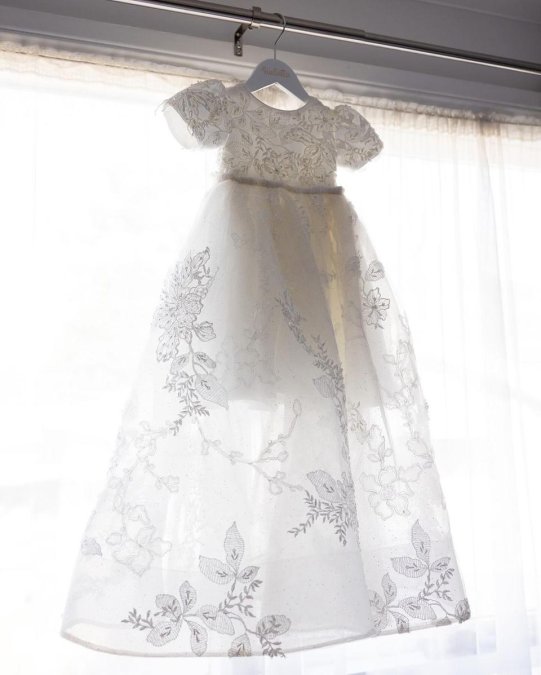
A custom christening gown typically takes 8 to 12 weeks from design approval to delivery, depending on fabric sourcing, embroidery detail and fitting rounds. This guide from MTK Australia walks through the full production schedule, what slows it down, and when a rush order is realistic, so you can plan backwards from your event date.

Standard Production Timeline at a Glance
Stage |
Typical Duration |
What Happens |
|---|---|---|
Initial consultation |
1 week |
Discuss event date, style and budget |
Design and measurements |
1-2 weeks |
Finalise fabric, lace and custom measurements |
Fabric sourcing |
1-2 weeks |
Order ivory silk, linen or lace overlay |
Garment construction |
4-6 weeks |
Cutting, hand-stitched detailing, assembly |
Fitting and alterations |
1-2 weeks |
Check fit, adjust seams and hem |
Final finishing and delivery |
1 week |
Pressing, packaging, shipping |
Most gowns land in the 8-12 week range. MTK Australia's custom gowns take approximately 12 weeks for completion.
Step-by-Step: From First Consultation to Final Fitting
- Book an initial consultation. A 30-minute appointment, in store or online, covers the event date and timeline.
- Share your design ideas. Bring inspiration photos or pick from a gallery.
- Confirm measurements and design. Lock in colour, fabric, lace and silhouette.
- Approve the design summary. Your dressmaker drafts a unique pattern for your child.
- Wait for construction. Allow 8 weeks for creation in the workroom.
- Attend a fitting. Local families can book an in-store fitting; remote families get follow-up support.
- Receive your gown. It arrives packaged, with post-delivery support for minor alterations.
Bespoke Christening Gown Lead Time: What Affects It
The biggest factors in bespoke christening gown lead time are fabric sourcing and embroidery complexity. A simple linen gown with minimal lace moves faster than an ivory silk piece with hand-stitched embroidery.
Fabric Sourcing and Embroidery Complexity
Some fabrics are stocked; others are ordered in. Silk, fine lace overlay and specialty trims can add one to two weeks to the front end of a project.
- Simple cotton or linen: fastest to source and sew
- Ivory silk with lace overlay: adds sourcing and handling time
- Hand-stitched embroidery details: the single biggest time driver
- Beaded lace: slower to apply and inspect for quality
Fitting Schedule and Alteration Rounds
A good pattern means fewer alterations. When measurements are taken carefully up front, most gowns need little to no adjustment, though a gown cut months before the event may need a hem or seam tweak.
The Custom Baptism Outfit Design Process Explained
The custom baptism outfit design process starts with a consultation and ends with a hand-finished garment built to your child's exact measurements. You choose the style, fabric and details; the dressmaker handles the construction.
Week-by-Week Production Breakdown
This assumes a standard 10-12 week commission. Timings shift with fabric and embroidery complexity.
Week |
Stage |
What Happens |
Who Is Involved |
|---|---|---|---|
Week 1 |
Consultation and brief |
Event date, style direction, budget range and any heirloom fabric discussed |
You and the dressmaker |
Week 1-2 |
Design finalisation |
Silhouette, colour, lace and trim confirmed; design summary approved in writing |
You and the dressmaker |
Week 2-3 |
Measurements and pattern drafting |
Measurements taken in store or by video call; a unique paper pattern is drafted to those numbers |
Dressmaker |
Week 3-4 |
Fabric and trim sourcing |
Silk, linen, lace overlay and buttons ordered or pulled from stock; specialty trims may add a week |
Dressmaker and suppliers |
Week 4-9 |
Construction |
Fabric cut, lace applied, embroidery worked, seams and closures assembled |
Dressmaker and any hand-finishing specialist |
Week 9-10 |
First fitting |
Gown tried on the child; hem, seams and closures checked against the pattern |
You and the dressmaker |
Week 10-11 |
Alterations |
Adjustments made; a second fitting scheduled only if the child is between sizes |
Dressmaker |
Week 11-12 |
Final finishing and delivery |
Pressing, quality inspection, packaging and dispatch or collection |
Dressmaker |
Design Consultation and Custom Measurements
The design consultation is where you review photos, discuss colour and silhouette, and settle on fabric and lace. Then comes measurement.
A few key measurements drive the whole pattern:
- Chest circumference
- Waist circumference
- Shoulder to belly button length
- Shoulder to dress length
- Sleeve length, if required
Garment Construction and Quality Checks
Construction is the longest phase, usually four to six weeks. The dressmaker cuts the fabric, applies lace and embroidery, and assembles the gown, with seams, closures and hems inspected before it moves to fitting.
Can You Rush a Custom Gown? Rush Order Feasibility
If the baptism is four weeks out, or two, here is what is genuinely achievable and what is not.
What a Compressed Timeline Actually Looks Like
A rush order compresses the same stages, not skips them. A realistic four-week plan:
Custom-Made Girls’ Dress Deposit →
Week |
Stage |
What Must Happen |
|---|---|---|
Week 1 |
Consultation and design lock |
Event date confirmed, silhouette and fabric chosen, deposit paid |
Week 1-2 |
Fabric and trim sourcing |
Dressmaker orders from stockists who can ship within days; in-stock silk and lace only |
Week 2-4 |
Construction |
Cutting, assembly and finishing compressed into roughly 10-14 working days |
Week 4 |
Single fitting and handover |
One fitting, minor tweaks done same week, gown collected or express-shipped |
What Makes a Rush Realistic
Rush orders succeed when the variables are controlled:
Custom-Made Chistneing Gowns
- Simple silhouette. A straight or A-line gown with a button back and minimal lace moves fastest. A fully beaded bodice with hand-stitched embroidery does not compress.
- In-stock fabric. If the silk or lace overlay has to be ordered from an overseas mill, the timeline is out of the dressmaker's hands. Ask what is already on the shelf.
- Measurements taken in person or by video call. Posted measurements that arrive wrong cost a full remake, which no rush schedule can absorb.
- One fitting round, accepted up front. Two fitting rounds is a standard luxury; in a rush it is a luxury you cannot afford.
- A confirmed event date at the first conversation. Vague dates push the deadline and the risk onto the dressmaker.
When a Rush Order Is Not Realistic
A rush is not realistic when:
- The design requires hand-embroidered motifs or beaded lace applied stitch by stitch
- The fabric is a specialty silk or heirloom lace that must be sourced to order
- The child is between sizes and the gown needs a second fitting to sit correctly
- The event is fewer than 10-14 days away and no partially built gown exists
In those cases, a dressmaker will usually decline rather than deliver something that fails on the day.
Fallback Options If You Are Out of Time
If a bespoke gown cannot be built in time:
- Off-the-rack gown with alterations. Buy a ready-made christening gown and have a dressmaker adjust the fit and add a personal detail such as a monogram or a length of family lace. Turnaround is often under a week.
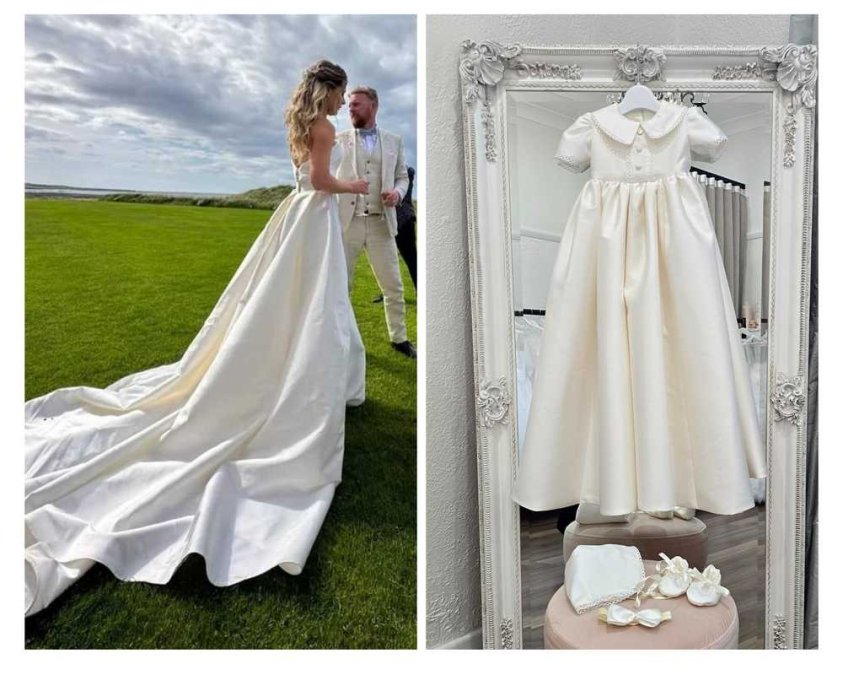
- Repurpose a family gown. If a parent or grandparent has a wedding dress or christening gown in storage, a dressmaker can cut and resize it. The fabric already exists, which removes the sourcing stage entirely.
- Simplified custom design. Ask for a plain cotton or linen gown with a single lace trim. It is still made to measure, but the construction time drops sharply.
- Borrow or hire. Some parishes and family networks keep gowns for exactly this purpose. It is not bespoke, but it is immediate.
DIY vs Professional: Cost and Time Compared
Factor |
DIY |
Professional Dressmaker |
|---|---|---|
Time to complete |
20-40+ hours of your own time |
8-12 weeks, hands-off |
Fabric cost |
Full retail, often wasted on errors |
Sourced and cut by a pattern maker |
Fit |
Depends on your skill |
Custom pattern to your child's measurements |
Embroidery and lace |
Hard to replicate by hand |
Hand-stitched detailing |
Risk |
High if you are new to sewing |
Low; quality checks built in |
Heirloom quality |
Varies widely |
Built to last generations |
Heirloom Christening Gown Preservation and Storage
Hand washable gowns can be gently washed, but for beaded lace or hand embroidery, professional cleaning is safer. Proper storage keeps fibres stable and stops creases from setting.
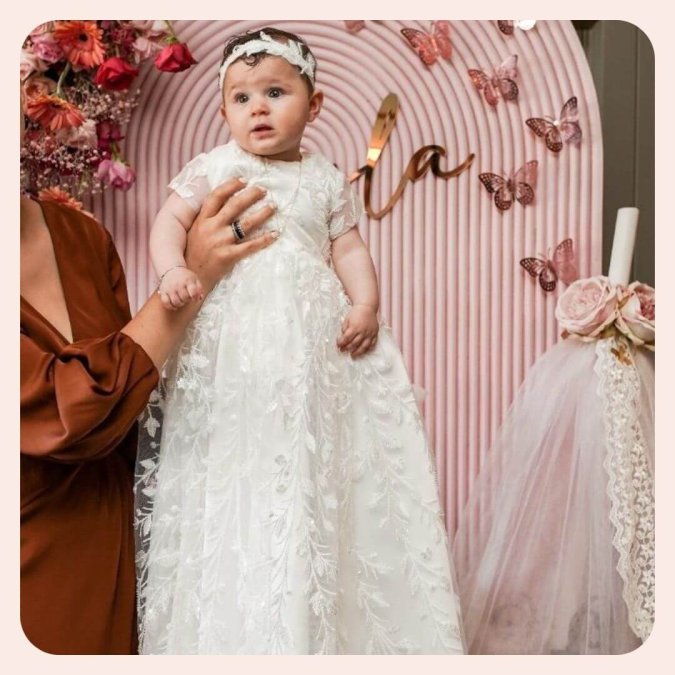
Budgeting and Shipping for Your Custom Gown
Budget depends on fabric, detailing and timeline, so ask for a quote. MTK Australia offers custom options from a Custom Made Girls Gown starting at $80.00 to the Katia Christening Baptism Gown at $700.00, with deposits from $200.00 to $500.00.

On shipping, two things matter:
- Turnaround time: build shipping days into your total lead time
- Shipping logistics and customs clearance: international orders can be held at customs, so order early
Frequently Asked Questions
How long does it take to make a custom dress?
Most custom christening gowns take 8 to 12 weeks from design approval to completion. At MTK Australia, the Custom-Made Girls' Dress Deposit allows 8 to 10 weeks for creation, while the Custom Made Girls Gowns require approximately 12 weeks. This timeline covers fabric sourcing, pattern making, construction, embroidery, and any fitting adjustments. If your baptism ceremony is sooner, ask about rush order availability before placing your deposit.
How far in advance should I order a bespoke christening outfit?
Order at least 12 to 16 weeks before the baptism ceremony to allow for the full bespoke christening gown lead time, including consultation, custom measurements, construction, and a fitting. If you are converting a wedding dress or requesting complex embroidery details, add extra weeks for fabric sourcing and design sign-off. Booking your initial consultation early also gives you more flexibility if alterations are needed.
Can a custom christening gown be made in under a month?
A rush order is possible in some cases, but it depends on the design complexity and workroom capacity. MTK Australia offers rush orders by request, though a fully hand-stitched gown with embroidery details may not be feasible in under four weeks. Simpler silhouettes in stock fabrics have the best chance. Contact the dressmaker directly to confirm whether your event date can be met.
How do I preserve a christening gown so it lasts as an heirloom?
Heirloom christening gown preservation requires careful handling. Proper textile care protects ivory silk, linen, and lace overlay for generations.
Planning a christening around a tight deadline is stressful, but the timeline is predictable once you know the stages. MTK Australia makes the process easier with a personalised design consultation, custom measurements taken in store or online, and handcrafted gowns built to be kept for generations. Book an appointment with MTK Australia and start your child's heirloom today.


