



Table of Contents
- The Debutante Ball Dress Code and Etiquette
- Choosing Silhouettes and Styles for Teenagers
- The Rise of Custom Made Debutante Gowns
-
Our Top Picks: Formal Debutante Dresses for 2026
- 1. Ella Debutante Dress - Custom Made Layered Tulle Gown
- 2. Maci Debutante Dress - Pearl Bodice Layered Tulle Gown
- 3. Violet Debutante Dress - 3D Lola Lace Layered Tulle Gown
- 4. Ellena Lace Beaded Debutant Dress
- 5. Ava Lace Beaded Debutant Dress with Swirl Skirt
- 6. Sienna Corseted Lace Beaded Debutant Dress
- 7. Aleisha Beaded Debutant Dress
- 8. Giselle Hand Beaded Pearl Bodice Debutante Gown
- 9. Claudia Custom Debutante Gown - Floral Corset Bodice
- 10. Eunice Custom Debutante Dress - Pearl Corset Ballgown with Statement Bow
- Debutante Dress Alterations Guide: Ensuring the Perfect Fit
- Sustainable and Pre-Loved Formal Wear Options
- Frequently Asked Questions
Last Updated: October 2, 2026
The Debutante Ball Dress Code and Etiquette
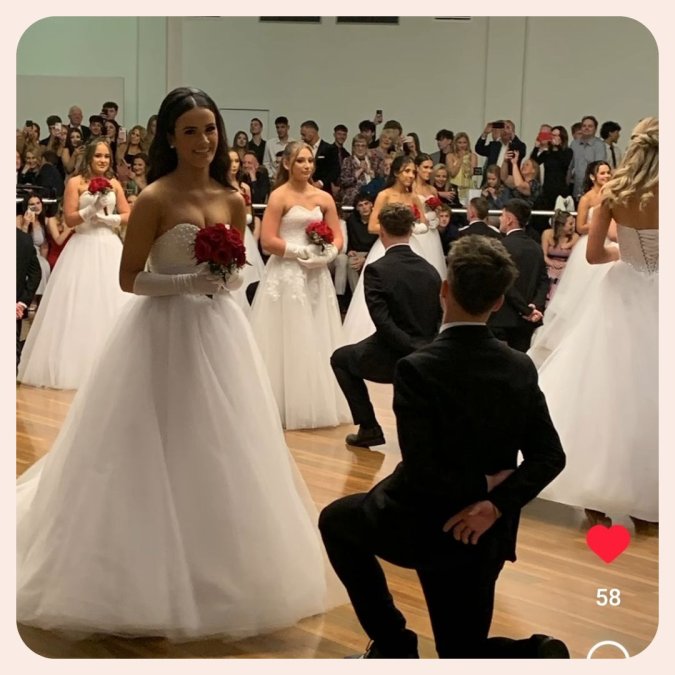
Most debutante balls in Australia follow one rule: white, floor-length, and formal. Debutante dresses are the centrepiece of that tradition, so confirm the dress code before falling in love with a style.
Etiquette around the gown is practical rather than fussy:
- Gloves are optional and vary by region
- A modest neckline is usually preferred for the presentation
- Shoes should be comfortable enough for the first dance
- Hair and accessories are kept elegant rather than busy
Choosing Silhouettes and Styles for Teenagers
The right silhouette comes down to body shape, comfort, and movement. A debutante ball involves walking, curtsying, and dancing, so a gown that photographs well but restricts movement is a poor choice.
The main silhouettes to weigh up:
Silhouette |
Best For |
Movement |
Watch Out For |
|---|---|---|---|
A-line |
Most body types |
Easy to walk and dance in |
Can feel plain without fabric interest |
Fit and flare |
Defining the waist |
Good, with a full skirt |
Skirt can catch on heels |
Ball gown |
A dramatic entrance |
Full but heavier |
Weight on the shoulders over a long night |
Mermaid cut |
Confident, structured look |
Limited below the knee |
Awkward for curtsying and stairs |
Sheath or column |
Slim, modern look |
Very easy to move in |
Less traditional for a debutante presentation |
Match the silhouette to the body, not the trend
A few patterns hold up in most fittings:
- Pear or hip-dominant shapes usually suit A-line and ball gowns, because the skirt flares from the natural waist and skims the hip.
- Apple or straight-up-and-down shapes often look best in fit and flare or a softly gathered A-line, where the waist is defined by seaming rather than by the body.
- Hourglass shapes can carry a fitted bodice with a full skirt, the classic debutante line.
- Tall frames handle ball gown volume and long trains well; petite frames look more balanced in A-line or fit and flare.
This is a starting point, not a rule, so a teenager tries two or three shapes rather than twenty.
Fabric changes how a silhouette behaves
Fabric matters as much as the cut. Tulle creates airy volume and is the most forgiving for movement, which is why it dominates debutante skirts. Satin holds a crisp shape but shows creases, while lace adds texture on the bodice.
Necklines, straps and the presentation walk
- Sweetheart necklines are the most common and suit most body types.
- Soft V necklines elongate the neck and work well with delicate lace trim.
- Strapless designs look clean but rely entirely on bodice fit; a lace-up corset back gives more security than a zip.
- Illusion and sheer panels add coverage without weight, which helps in warmer ballrooms.
- Straps and cap sleeves suit teenagers uncomfortable with strapless, or balls with a lot of movement.
If the committee allows pastels, confirm in writing first. Most still expect white or ivory, so choose the silhouette and fabric you love, then confirm the colour against the written dress code.
The Rise of Custom Made Debutante Gowns
Custom made debutante gowns have moved from niche to mainstream. Off-the-rack sizing rarely fits a teenager perfectly, and alterations can only do so much. A made-to-measure gown is cut to the wearer's own measurements, which changes how the dress sits and moves.
Our Top Picks: Formal Debutante Dresses for 2026
1. Ella Debutante Dress - Custom Made Layered Tulle Gown
The Ella is the most accessible entry point at $1,300. A fitted bodice with a soft V neckline and delicate lace trim keeps it refined, while the multi-layered tulle skirt gives real movement. A back zip is easier for some teenagers than a lace-up corset.
2. Maci Debutante Dress - Pearl Bodice Layered Tulle Gown
Priced at $1,800, the Maci leans into detail. The structured bodice is finished with pearl embellishments, and the low back with a statement bow makes it striking from behind, which matters for the presentation walk. Fine straps and a tiered tulle skirt add volume.
3. Violet Debutante Dress - 3D Lola Lace Layered Tulle Gown
The Violet, also $1,800, is defined by its premium 3D Lola lace bodice, with each appliqué placed by hand for depth and texture. It has an invisible back zip and a soft layered tulle skirt.
4. Ellena Lace Beaded Debutant Dress
A romantic sweetheart neckline and strapless design set the Ellena apart at $1,600. The beaded lace bodice extends down the front panelling, a lace-up corset back allows fine adjustment, and the gathered side-panel tulle skirt adds graceful shape.
5. Ava Lace Beaded Debutant Dress with Swirl Skirt
At $1,400, the Ava pairs a classic sweetheart neckline with a delicately embroidered lace bodice. Soft lace appliqué flows into a swirl tulle skirt, and the lace-up back corset gives a tailored fit.
6. Sienna Corseted Lace Beaded Debutant Dress
The Sienna is built around structure. At $1,400, the fitted corset bodice is adorned with intricate beaded lace, while the layered tulle skirt keeps it light enough for dancing.
7. Aleisha Beaded Debutant Dress
The Aleisha, $1,600, features a soft sweetheart neckline and a hand-beaded corset bodice. The beading is applied in layers for dimension, and the lace-up corset back allows adjustment. The full tulle skirt gives a classic debutante shape.
Ella Debutante Dress – Custom Made →
8. Giselle Hand Beaded Pearl Bodice Debutante Gown
The Giselle, $1,600, uses hand-applied pearl detailing across a structured bodice, each pearl placed individually for a soft, luminous texture that shifts in the light. The sweetheart neckline flatters, and the lace-up corset back tailors the fit.
9. Claudia Custom Debutante Gown - Floral Corset Bodice
The Claudia, $1,800, brings a princess-inspired finish. An illusion corset bodice with visible boning is adorned with 3D floral lace appliqués, paired with a sweetheart neckline and V waist, over a full layered tulle ballgown skirt.
10. Eunice Custom Debutante Dress - Pearl Corset Ballgown with Statement Bow
The Eunice, $1,800, is the most theatrical of the collection. A structured illusion corset bodice with hand-applied pearl embellishments leads to pearl-trimmed straps and an adjustable lace-up back. The oversized statement bow and full satin ballgown skirt make it unforgettable, though note satin holds shape well but drapes differently to tulle.
Debutante Dress Alterations Guide: Ensuring the Perfect Fit
Alterations are where most dress stress happens, and the fix starts before you order. A debutante dress alterations guide comes down to timing and measurements.

A quick pre-event checklist:
- Confirm the ball dress code in writing
- Take all four measurements before ordering
- Book the fitting at least 16 weeks out for custom gowns
- Schedule a final try-on two weeks before the ball
- Break in your shoes before the night
Sustainable and Pre-Loved Formal Wear Options
Formal wear has a sustainability problem: many gowns are worn once. A debutante gown is often the most expensive single garment a teenager will wear, but there are practical ways to reduce that waste without compromising on the night.
Repurpose a sentimental garment
A family wedding dress or a mother's or grandmother's gown can be reworked into a debutante dress, a genuine bespoke route for families who want the dress to carry history. The practical steps:

- Have the existing garment assessed by a dressmaker before committing. Old fabric can be fragile, and lace or beading may not survive unpicking.
- Expect to keep the bodice or the skirt, not both. Most reworks use the original fabric as the skirt or as an overlay on a new bodice.
- Budget for a full set of measurements and a new internal structure, because the original boning and lining are usually past their best.
- Allow the same lead time as a custom gown, because the work is comparable.
Buy pre-loved
Many debutante gowns are sold after a single wear, often in excellent condition, the most common circular route and the easiest to execute. If you go this way:
- Check the hem, underarms and zip first. These are where wear shows.
- Ask whether the gown has been dry cleaned and whether the beading is intact.
- Budget for alterations. A pre-loved gown in the right size still usually needs the hem and bodice adjusted.
- Confirm the colour against the ball's written dress code before you buy, because pre-loved stock is often ivory rather than pure white.
Rent
Renting suits a one-off ball: less upfront cost, no gown sitting in a wardrobe afterwards. The trade-offs are real, rental stock is limited around peak ball season, sizing is fixed, and you cannot alter a rented gown. Book early and confirm the damage policy in writing.
Resell or pass on
If you buy, plan the exit before the ball. A gown that is dry cleaned, photographed properly and listed within a few weeks holds more value than one stored for a year. Passing it to a younger sibling, cousin or family friend is the simplest option.
Custom made gowns and the circular economy
Custom made debutante gowns sit at the opposite end of the spectrum from fast fashion, but they can still be sustainable. A well-made gown with generous seam allowances can be altered and worn again, passed down, or resold. Ask for enough seam allowance at the bust and waist for a future alteration, and choose a classic silhouette that will not date.
Think in cost per wear, not price
- Buy new, wear once, store: highest cost per wear.
- Buy new, wear once, resell: cost per wear drops by the resale value.
- Buy pre-loved, alter, wear once, resell: usually the lowest cost per wear.
- Rent: low upfront cost, no resale value, no alteration.
- Custom made, worn once, then altered and reused or passed down: higher upfront cost, but the lowest cost per wear over several wears.
A final practical note: whatever route you choose, confirm the ball's dress code in writing first. Sustainability is worth pursuing, but not at the cost of turning up in a gown the committee will not accept.
Frequently Asked Questions
What kind of dresses should I wear to a debutante ball?
A debutante ball calls for a floor-length white gown. The traditional dress code typically specifies a white ball gown with a full skirt, often made from layers of tulle, satin, or lace. While the classic white dress is standard, some events allow off-white or ivory shades. Always check with your specific ball committee for any variations in the dress code, as some may permit subtle colour accents or specific sleeve requirements.
How far in advance should I start shopping for a debutante gown?
Start shopping at least six to nine months before your debutante ball. Custom made debutante gowns often require a 16-week pre-order period, plus time for fittings and alterations. This timeline ensures your dress arrives with enough buffer for any adjustments. If you are buying off-the-rack, aim for four to six months ahead to allow for alterations. Last-minute shopping limits your choices and can lead to rushed, expensive alterations.
What are the differences between a debutante dress and a Year 12 formal dress?
A debutante dress is traditionally a white, floor-length ball gown with a full skirt, worn for a formal debutante ball. A Year 12 formal dress is often shorter, may be any colour, and follows current teen fashion trends. Debutante gowns prioritise tradition and modesty, often featuring a structured bodice and voluminous tulle skirt. Formal dresses offer more flexibility in silhouette, colour, and length, reflecting personal style rather than ballroom tradition.
How can I ensure a perfect fit for a custom-made debutante dress?
To ensure a perfect fit, provide accurate measurements: chest circumference, waist circumference, hollow to waist, and hollow to floor. Custom made debutante gowns are crafted to these measurements, but always ask about the alterations policy. Reputable makers include alterations in the price. Schedule a fitting at least six weeks before the event to allow time for any adjustments. A lace-up corset back also offers some adjustability for minor size fluctuations.


